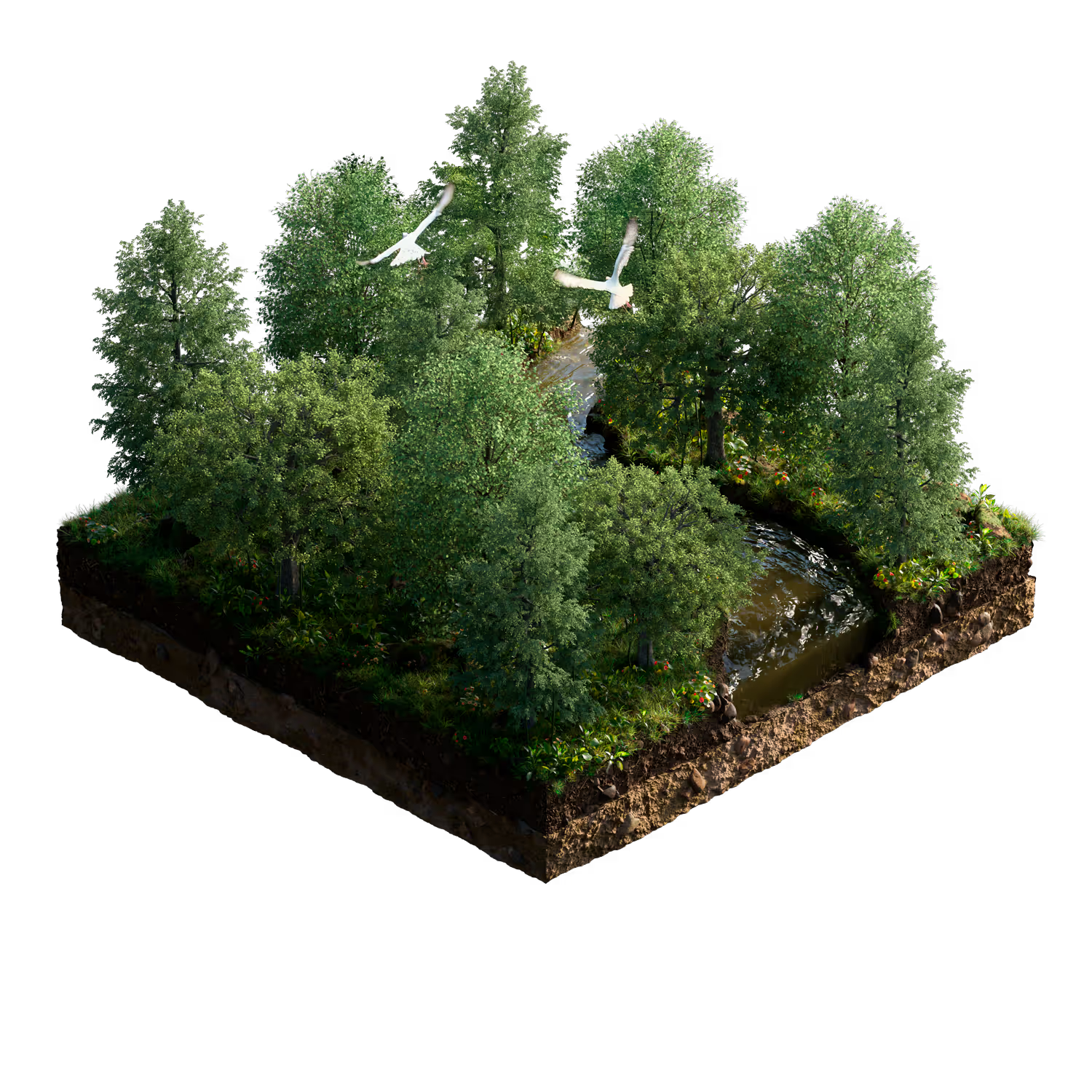
Productive Preservation Economics
Saphi unites regenerative agronomy, bioacoustic and remote measurement, and institutional-grade verification to make intact, regenerating ecosystems an investable asset class, with returns that reach the communities who steward the land.
Capital flows to what it can measure and underwrite. For living ecosystems, the cost of credible measurement has been high enough to keep nature off the balance sheet, even as the economy depends on it. The result is a structural mispricing visible in the global numbers.
Sources: UNEP State of Finance for Nature; CBD Kunming-Montreal Global Biodiversity Framework. Figures current as of mid-2026.
The gap between what nature is worth and what nature is paid is the opportunity. Closing it takes measurement that institutions trust, and instruments they can hold. Saphi builds both.

The harvest arrives every season. The forest stays.
Land is most durably preserved when its standing value becomes productive for the people who live in it. The framework Saphi originated begins at the unit where land use is actually decided: the household and the community. A family earns a predictable return from intact, regenerating land, and conservation becomes the rational economic choice that sustains itself. For that return to exist and to be investable, four conditions hold at once. Saphi treats each as something to build.
Preservation becomes durable the moment a family earns more from intact, regenerating land than from clearing it.
Saphi developed the framework with external academic validation. [P1]

Every number we publish points back to a hectare.
The value of everything Saphi issues rests on whether the outcome can be trusted. Saphi builds that trust as infrastructure and aligns it to the frameworks institutions already recognize. The Architecture of Trust has four parts.
Saphi gives institutions a record they can audit, in the language their own frameworks already speak.
Every institution holds exposure to nature, measured or not. Saphi turns that exposure into a position you can hold, verify, and report.
References. [1] UNEP, State of Finance for Nature. [2] CBD, Kunming-Montreal Global Biodiversity Framework, Target 19. [P1] Saphi, Productive Preservation Economics white paper (peer-reviewed publication forthcoming; external validator on file). Standards: TNFD; ICVCM Core Carbon Principles; Biodiversity Credit Alliance; IUCN Global Standard for Nature-based Solutions; Science Based Targets Network. Figures current as of mid-2026.