Saphi  ·  Knowledge

Sustainable
Cacao & Coffee

Peru is the genetic cradle of cacao and a rising specialty-coffee origin. Antiari verifies every bean from satellite to soil to ledger; Saphi turns that proof into offtake, secured payment, and a premium that reaches the farmer.

Antiari verifies/ Saphi accelerates/ Sama Earth carries it home
Scroll
01 / The reality

The world pays for fine chocolate and specialty coffee. The origin keeps almost none of the value.

16 of 25
global cacao genetic groups originate in Peru, the genetic cradle of cacao
$130.56B
global chocolate market in 2021, growing 4.6% a year through 2030
850 kg/ha
average Peruvian cacao yield, below global competitors
3.7M bags
Peru’s 2022 coffee crop, of which one quarter reaches specialty grade
313,000
Peruvian families grow this cacao and coffee, on plots of 1 to 5 ha
39 kg CO₂e
emitted per kg of chocolate, farm to bar (15 to 20 kg for roasted coffee)

Sources: Saphi Cacao Framework; the Saphi / Saudi Coffee Company proposal; Bioversity International / MOCCA cacao catalogues (2023 to 2024).

Every lot begins with people in a clearing.

02 / The ecosystem

Follow the bean. Watch where the premium leaks.

From a smallholder plot to a chocolatier or roaster, value passes through many hands. At each step the link between a specific farm, a verified quality, and a fair price thins, and the premium settles far from the grower.

01 Farmers
Harvest
Yields of 850 kg/ha (cacao) and 15 quintals/ha (coffee) on plots of 1 to 3 ha. Most output trades on commodity terms, and the premium forms further up the chain.
02 Cooperatives
The handoff
On a sack, one clone name covers many genetics across fields, and aromatic native cacao gets crowded out by commodity clones. Quality blurs as lots are pooled.
03 Processors
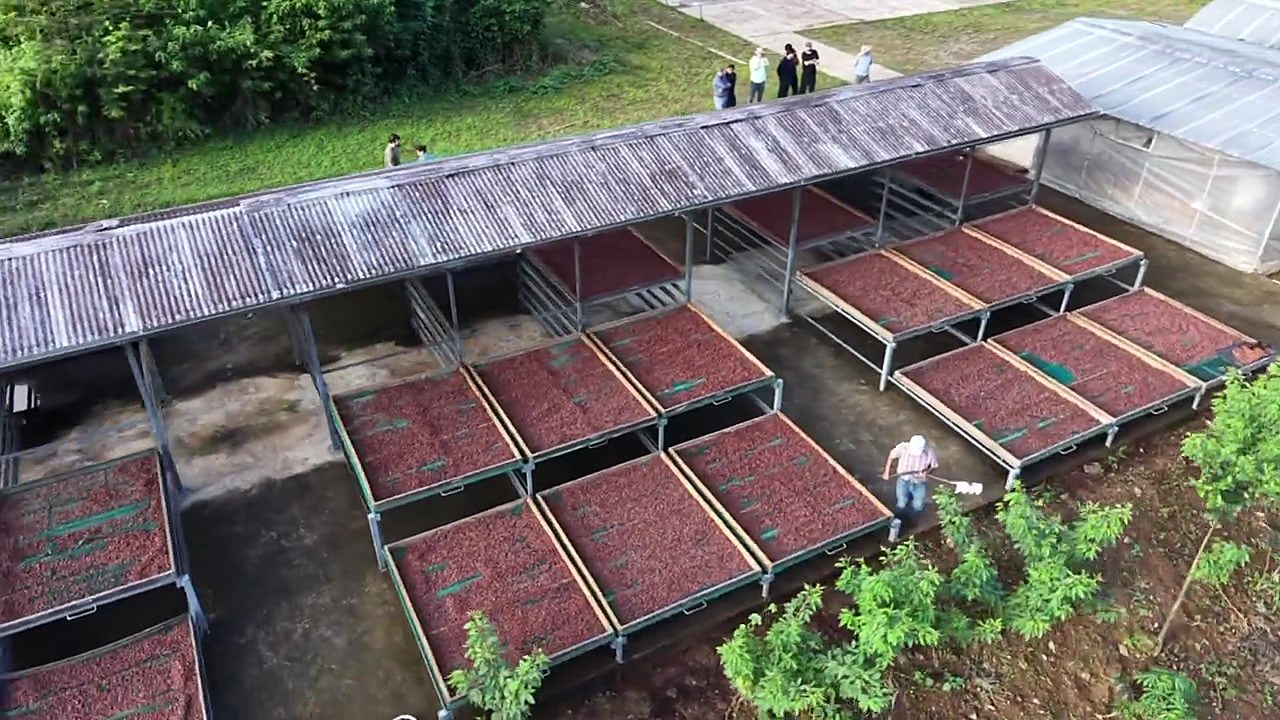
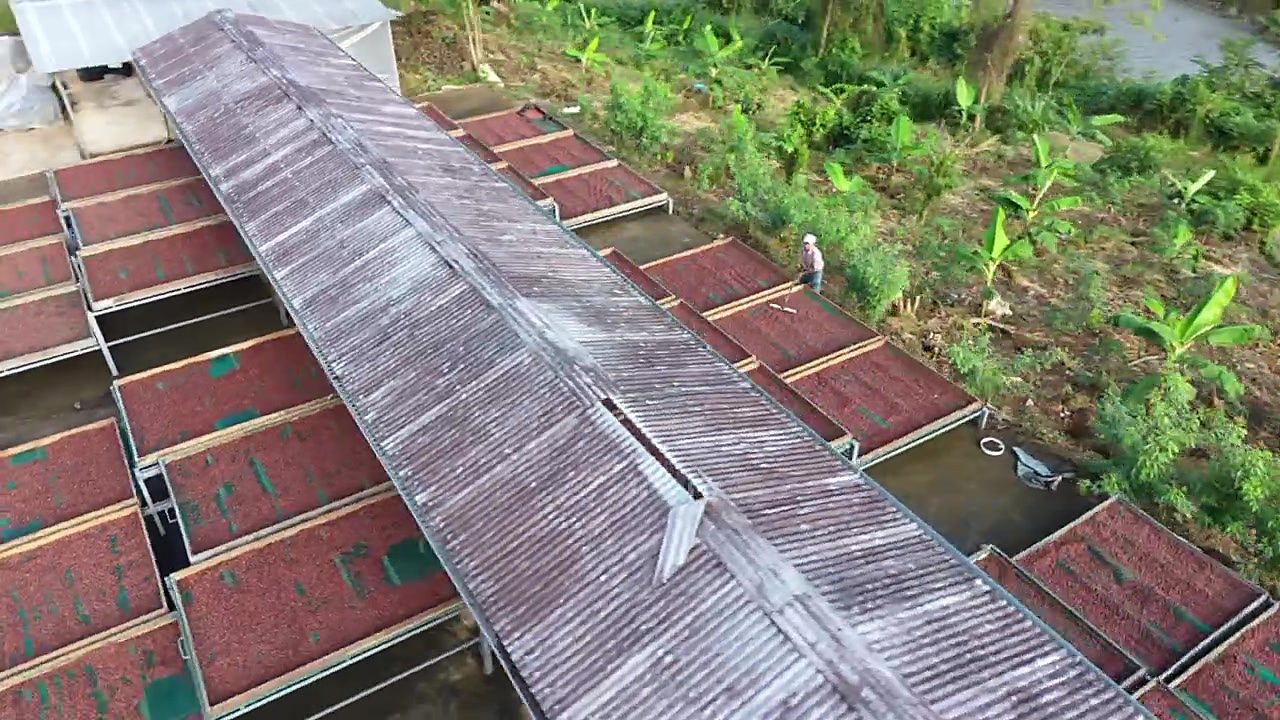
Ferment & dry
Energy- and water-intensive steps with avoidable emissions. Provenance and quality data arrive self-reported and uneven.
04 Traders
The blend
After centuries of moving material, a region name now spans many varieties, and cadmium exposure clouds EU market access.
05 Roasters
The buyer
Buyers pay for fine-flavor and deforestation-free assurance that arrives unproven, so premium quality settles to commodity terms.
On a sack, one clone name can carry a dozen different beans.

Bioversity International / MOCCA cacao catalogue, 2023, paraphrased

03 / The dependency stack

Every premium rests on the proof beneath it.

Strong agronomy and rising demand are already in place. What stays open is the proof that lets a verified bean command a premium and the rail that pays it to the farmer, and that is exactly where Antiari and Saphi work.

Unsolved · Saphi
Living-income premium & payment
Demand for fine-flavor cacao and specialty coffee is real and growing. The secured rail that pays a verified smallholder a premium at the farm gate is still to be built.
Partly solved
Agronomy, agroforestry & certification
Elite clones, agroforestry, and organic and fair-trade standards are proven on the ground. They hold with verification beneath them and demand above.
Unsolved · Antiari
Provenance, variety & deforestation proof
Genetic identity lives in labs (308 SNP markers across all 10 cacao chromosomes) and origin is georeferenced, yet that evidence is rarely tied to a tradable, EUDR-grade, farm-level claim.

Read it bottom-up: verification carries the whole stack. That base is Antiari. That apex is Saphi.

04 / The verification protocol
Antiari. Proof from satellite to soil to ledger.

The sovereign AI of the nature economy, applied to the bean. Antiari turns claims about origin, variety, and sustainability into EUDR-grade evidence, lot by lot.
Proof of variety
Genetic-affinity fingerprinting and 308 SNP markers across all 10 cacao chromosomes establish what a bean actually is, settling the gap where a clone name and the tree in the ground disagree.
Proof of place
Georeferenced provenance ties each lot to a named farm and grower: region, district, GPS coordinates. The chain runs from the plant back to the plot.
Deforestation-free, EUDR-grade
Satellite-to-soil monitoring confirms deforestation-free status and farm boundaries, the verified evidence an importer needs to clear EUDR and other requirements.
Compliance to the ledger
Per-lot cadmium and climate-resilience screening, AI crop monitoring, and sensory cupping against the Cacao of Excellence protocol write a tamper-evident record from field to ledger.
Explore the protocol at Antiari.ai →

The forest above the crop is part of the yield.

05 / Ecosystem acceleration
Saphi. From a verified bean to a premium that reaches the farmer.

Saphi accelerates the ecosystem and carries the knowhow. Once Antiari proves the bean, Saphi builds the demand, secures the payment, formalizes the producer, and routes value gated on verification.

Mechanism 01
Offtake & demand
Guaranteed access to the top 1% of Peruvian production, scaling from 1,000 to 10,000 tonnes a year by 2028, connects organized smallholders to buyers who pay for aromatic, specialty-grade beans.
Mechanism 02
Secured fragmented payments
A microfinance program for 20,000 smallholders, with carbon-credit sharing, moves money reliably to thousands of dispersed farmers, at the bean.
Mechanism 03
Trust & formalization
Agroforestry across 50,000 hectares with organic and fair-trade gates turns informal plots into a verified, market-ready supply base, lifting farm productivity by up to 40%.
Mechanism 04
MRV-gated value routing
Agroforestry sequesters up to 70 t CO₂ per hectare a year in cacao and 63 t in coffee. MRV turns that into carbon revenue and premiums routed to farmers, targeting +30% productivity and +50% income.
06 / The consumer brand
Sama Earth. Where a verified bean becomes a bar you can hold.

Cacao introduces Sama Earth, the brand that carries Antiari’s proof and Saphi’s premium onto the shelf. A consumer scans the wrapper, follows the bar back to the farm that grew it, and sees the conservation each purchase funds.

Farm-to-shelf traceability
A QR code on the wrapper opens the bean’s journey: the named farm, the verified lot, the people who grew it. It is the same record Antiari wrote at origin.
Conservation in every purchase
In the documented model, each purchase protects five square metres of critical habitat inside a UNESCO-recognized biosphere reserve of 4.1 million hectares.
Origin, kept whole
Single-origin micro-lots let fine-flavor Peruvian cacao carry its variety, its place, and its story all the way to the shelf, at a premium that flows back to the grower.
Culture on the label
Partnerships with indigenous communities put origin storytelling on the wrapper and a share of profit back into the places the cacao comes from.
Carry verified cacao to market →
07 / The gateway

One verified chain, every actor.

Saphi is the way in. From farmer to brand, each actor plugs into a single chain where the proof is shared and the premium is real.


Farmers & cooperatives
Register plots, plant verified elite material, and earn living-income premiums and carbon-credit shares routed on proof.
Roasters, chocolatiers & traders
Source the top 1% of Peruvian production with EUDR-grade proof you can independently trust.
Brands & consumers
Carry verified cacao to market through Sama Earth, with farm-to-shelf traceability and conservation in every purchase.
Governments & financiers
Formalize smallholders, underwrite verified flows, and access MRV-gated carbon value, de-risked by proof.
Something went wrong. Please try again.
You’re in.
Thank you. We will be in touch about entering the cacao and coffee ecosystem.
See the verification protocol →